What to actually carry for breakdowns, punctures and recovery situations on remote 4×4 routes, and why the basics absolutely matter more than the extras.
Spares, Tools and Recovery
Most breakdowns on the road are really mundane. Understanding which failures are common, and preparing for those specifically, is much more useful than trying to carry a solution for every possible fault.
Spares Worth Carrying
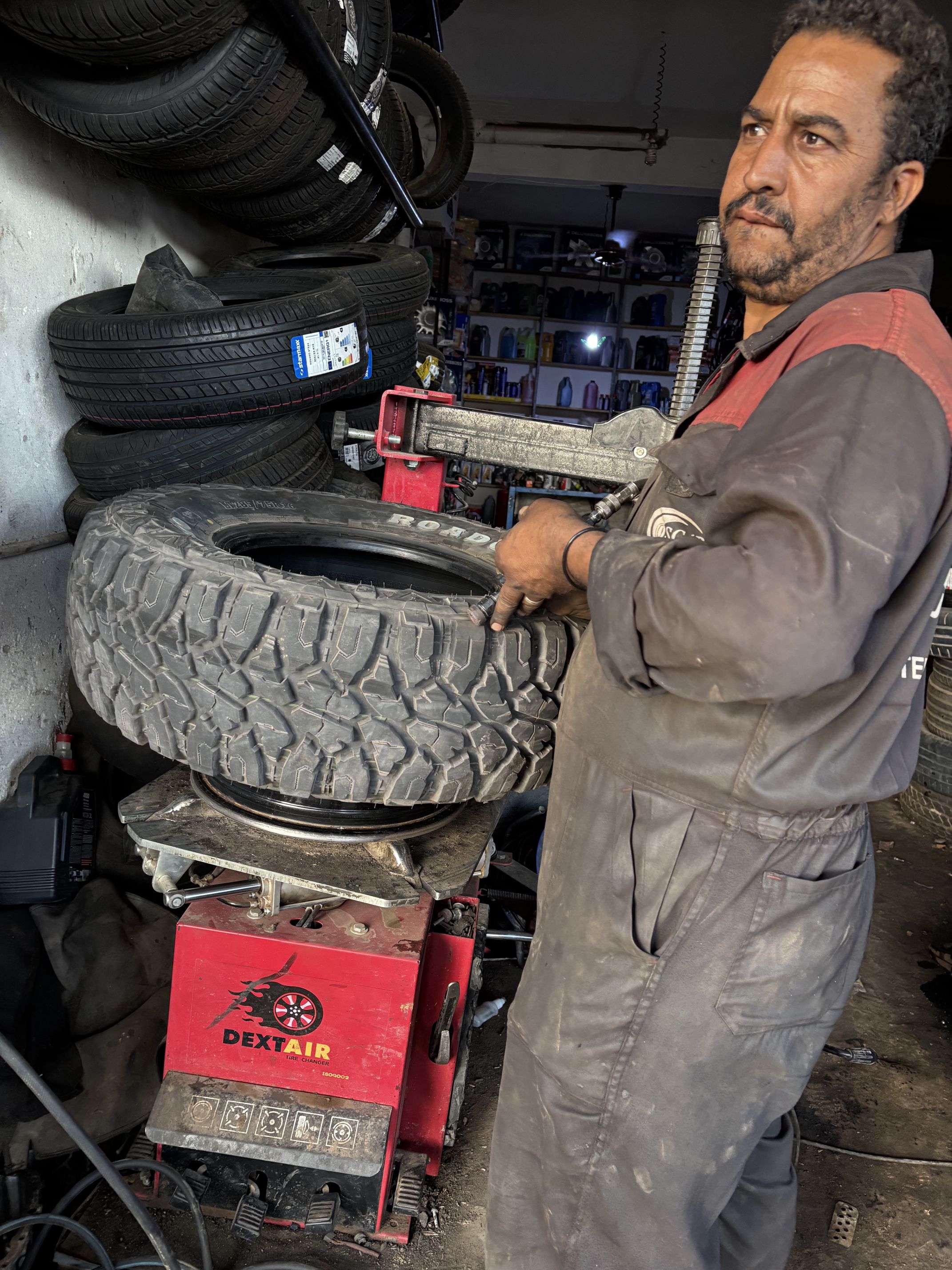
Prioritise parts that are cheap, light and prone to failure under vibration and heat: fan belts, radiator hoses, fuel filters, oil filters, wheel bearings and a full set of fuses if you can fit them all in. Add engine oil and coolant, transmission, differentials and brakes, since even a minor leak becomes a serious problem if you cannot top up. A spare set of injectors or an alternator is worth considering on older diesels, weight allowing.
Tools
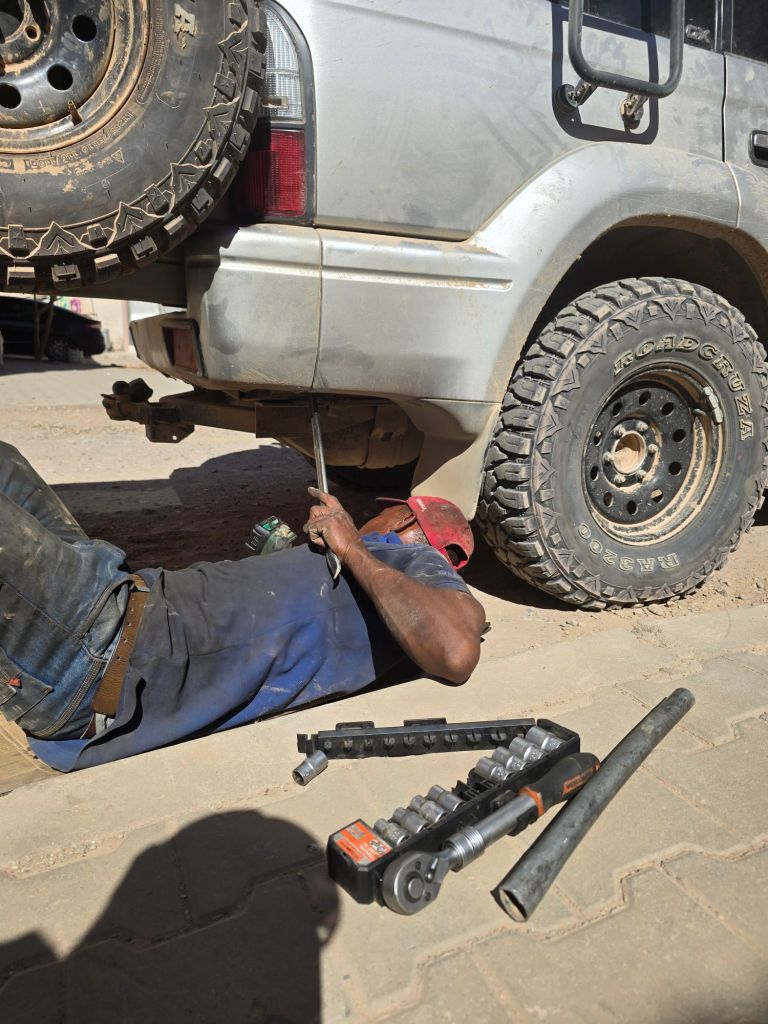
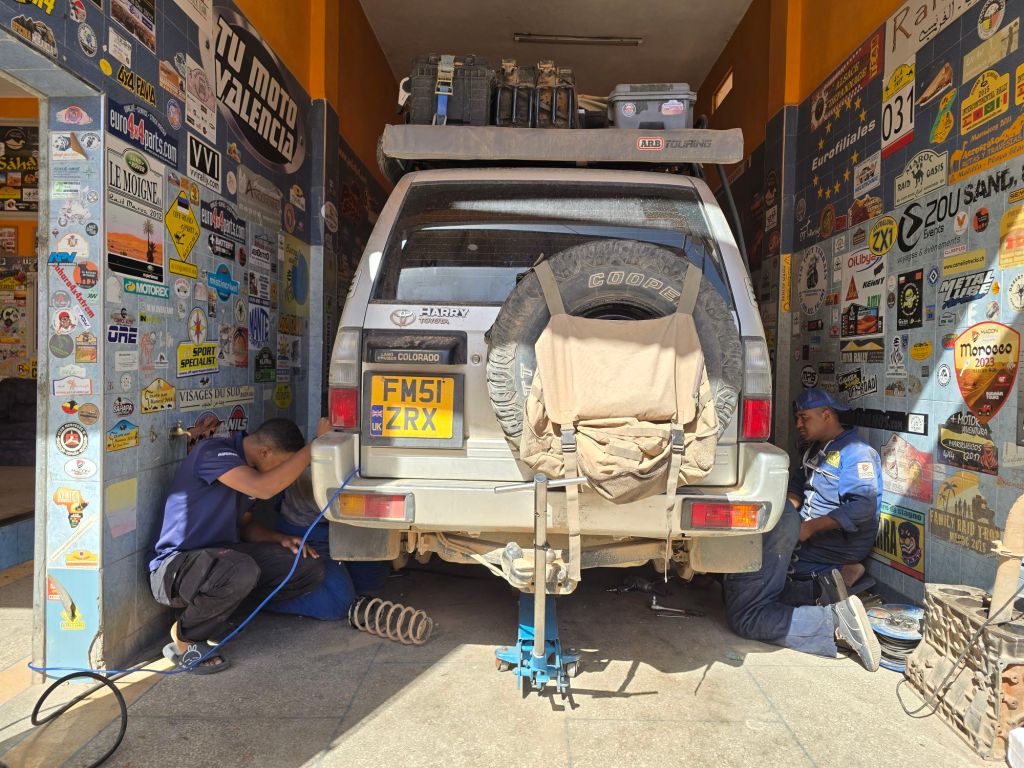
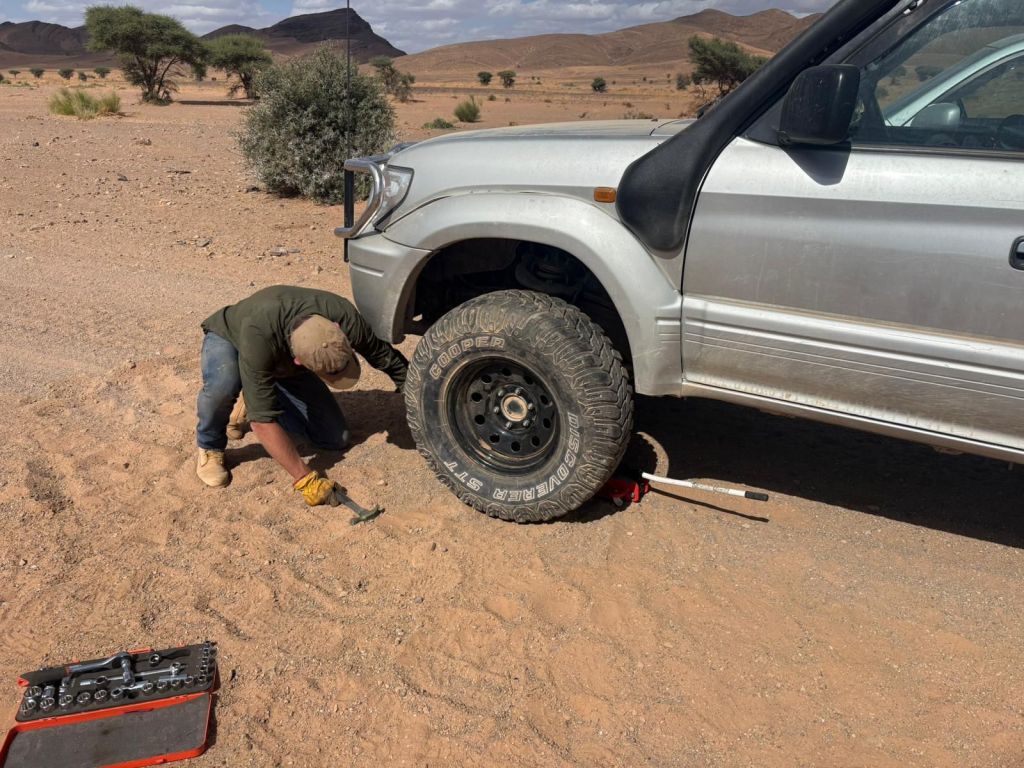
A basic overland toolkit covers sockets and spanners across the full range your vehicle uses, as well as screwdrivers, pliers, a multimeter, cable ties and wire. Add a torque wrench for anything structural, such as wheel nuts or suspension mounts. A decent trolley jack combined with a sand ladder doubling up as a base plate matter more than most travellers expect, since soft ground and sand are unstable under pressure.
Recovery Equipment
A rated recovery point at each end of the vehicle is the first requirement, since bumpers and tow balls are not designed for recovery loads and fail under strain. Pair this with a kinetic recovery rope or snatch strap, rated well above the vehicle’s laden weight, and soft shackles to reduce the risk of injury from a failed recovery point.
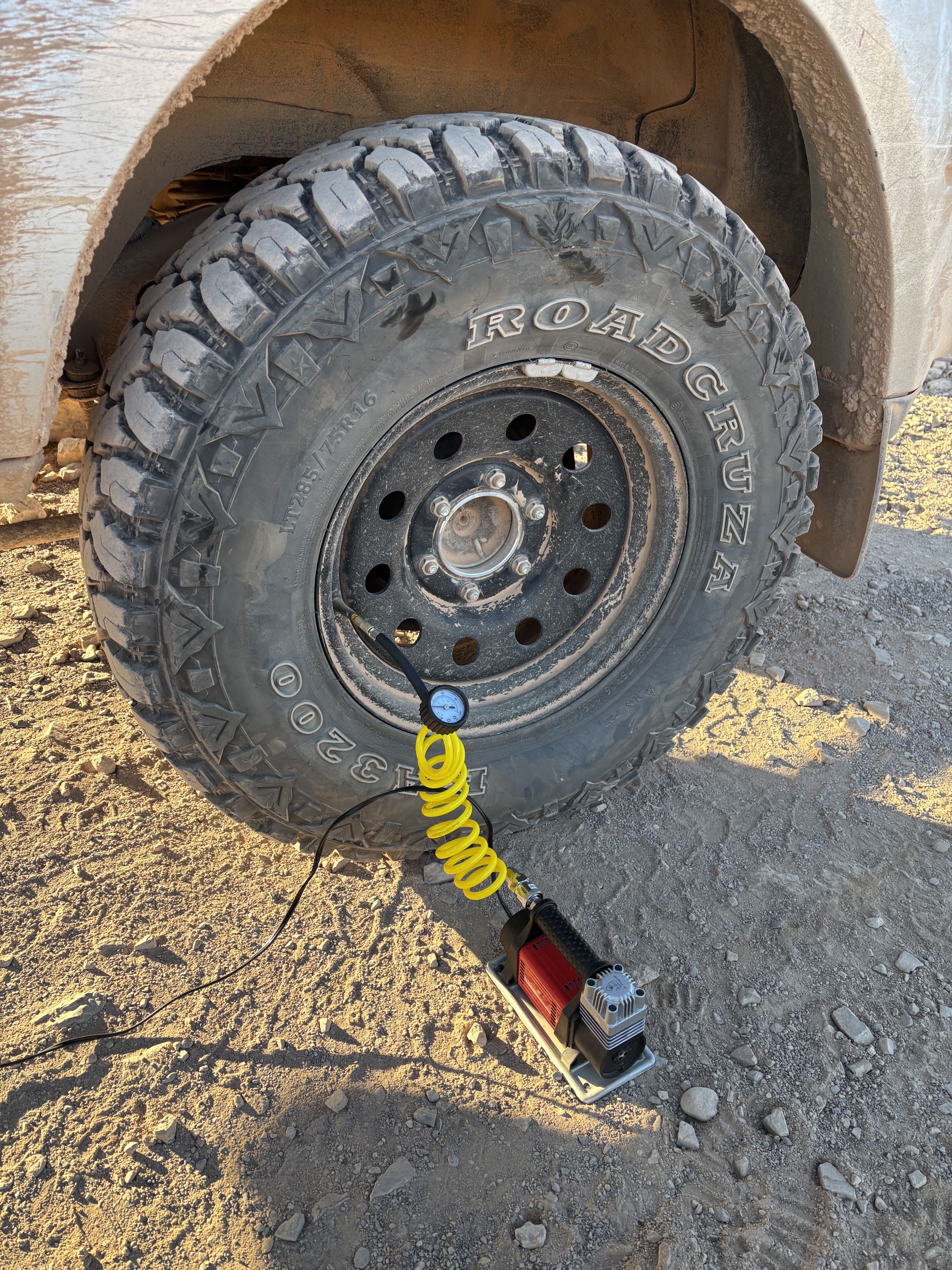
A high lift jack earns its weight on sand and mud recoveries, allowing you to lift a bogged wheel and pack material beneath it, but only if you have suitable jacking points. An air compressor is really useful as deflating tyres for soft terrain and reinflating afterwards can happen multiple times in a day.
Carry a basic understanding of these procedures before you need them. Reading a recovery strap’s rating under pressure, in poor light, with an audience, is the wrong moment to learn.
Winches
A winch solves a specific problem, self recovery without a second vehicle, and earns its cost and weight only on routes where solo recovery is a real possibility. For guided group trips travelling in convoy, a winch is rarely essential, since another vehicle and a kinetic strap usually resolve the situation faster.
Where a winch is justified, mounting and electrical draw deserve as much thought as the winch itself. A poorly wired winch strains the vehicle’s charging system, and an underrated mounting point defeats the purpose entirely. Synthetic winch line is lighter and safer under failure than steel cable, snapping without the recoil risk, and is now the sensible default for most overland builds.
Treat a winch as a considered addition once your recovery basics are proven, not a first purchase. Traction boards, a kinetic strap and a reliable jack solve the large majority of situations a solo overland traveller will actually encounter.
For anyone building a kit for the first time, spend proportionally more on recovery gear and tyre repair than on spare parts. Most trips end early due to a stuck vehicle or an unrepairable puncture, not a mechanical failure requiring a spare part.