What to actually carry for breakdowns, punctures and recovery situations on remote 4×4 routes, and why the basics absolutely matter more than the extras.
Spares, Tools and Recovery
Most breakdowns on the road are really mundane. Understanding which failures are common, and preparing for those specifically, is much more useful than trying to carry a solution for every possible fault.
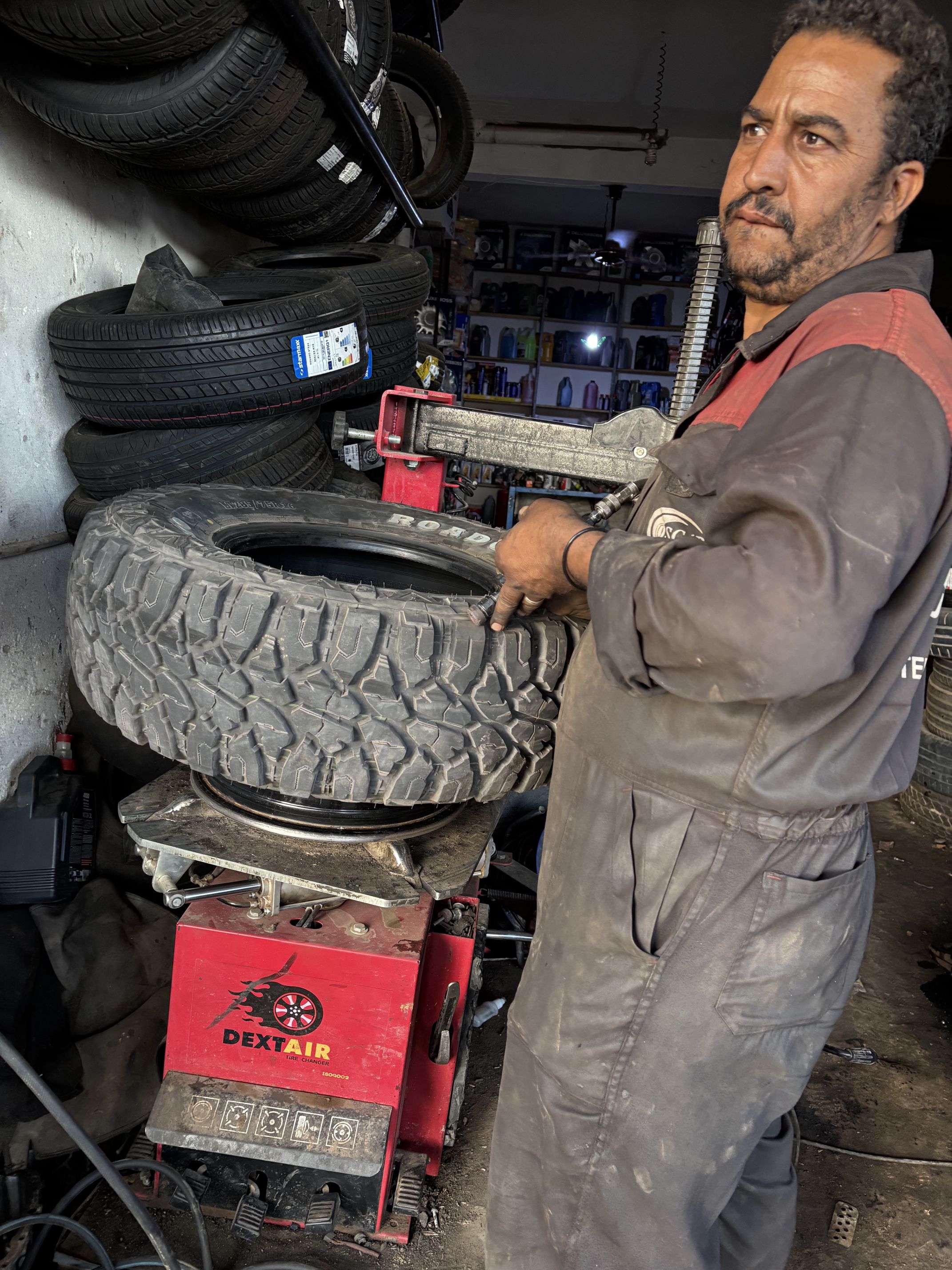
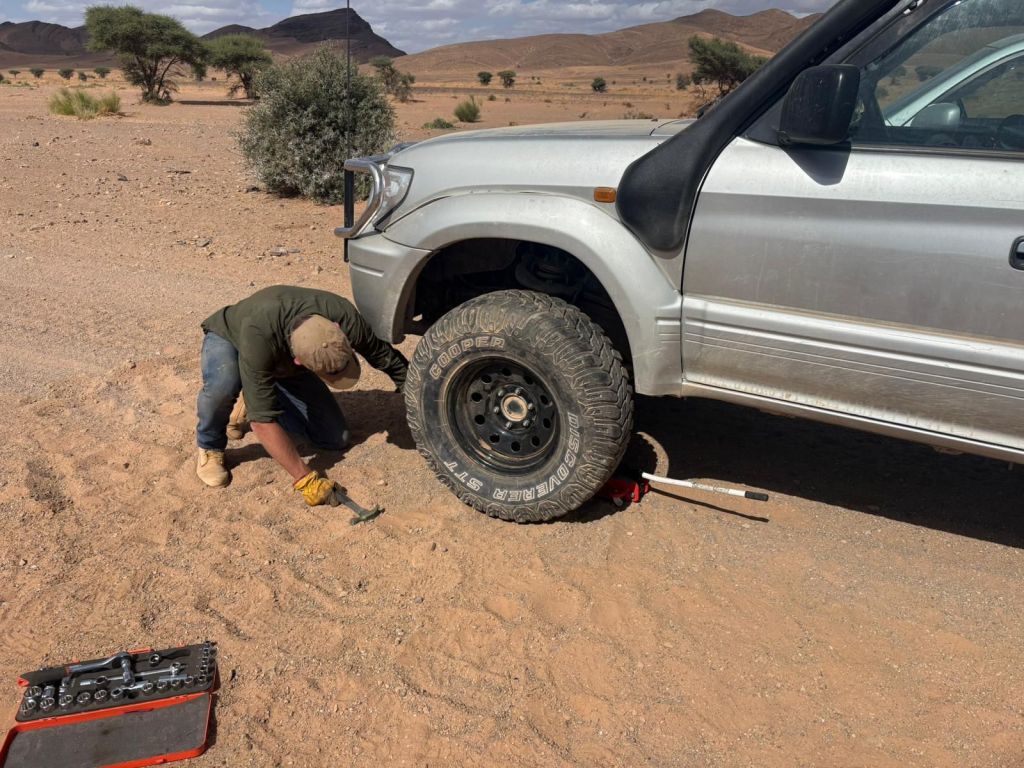
Expect punctures and subsequent repairs en route
Spares Worth Carrying
Prioritise parts that are cheap, light and prone to failure under vibration and heat: fan belts, radiator hoses, fuel filters, oil filters, wheel bearings and a full set of fuses if you can fit them all in. Add engine oil and coolant, transmission, differentials and brakes, since even a minor leak becomes a serious problem if you cannot top up. A spare set of injectors or an alternator is worth considering on older diesels, weight allowing.
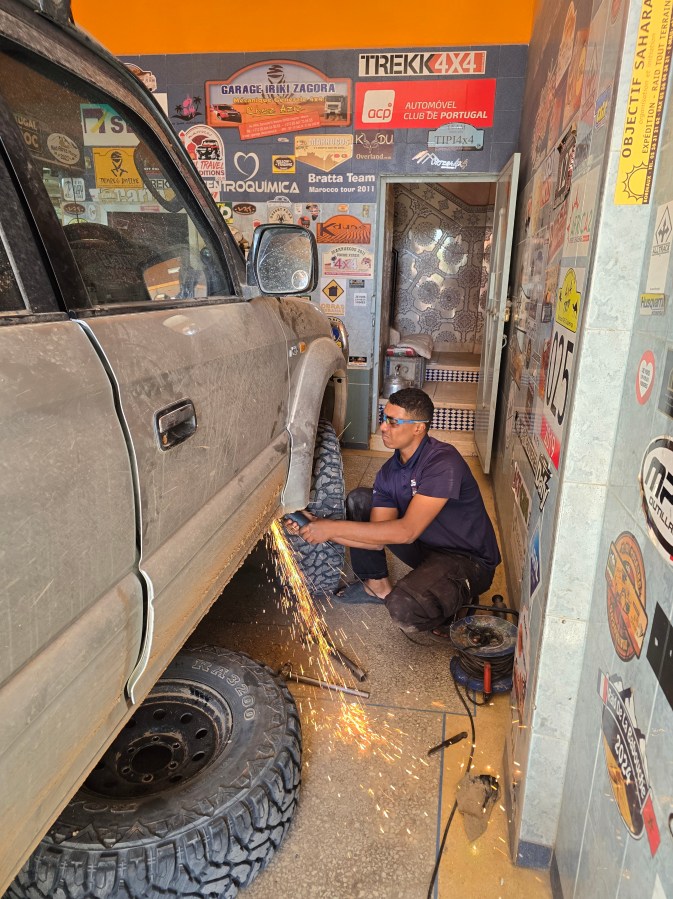
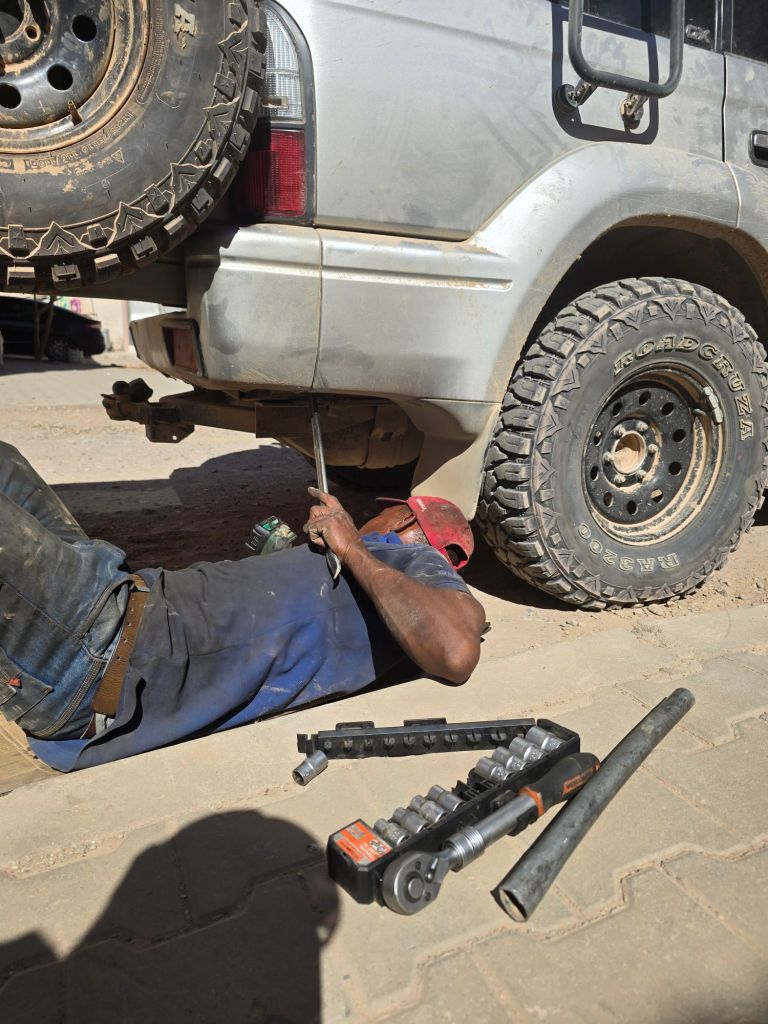
Local mechanics have seen a lot of 4×4 suspension issues
Tools
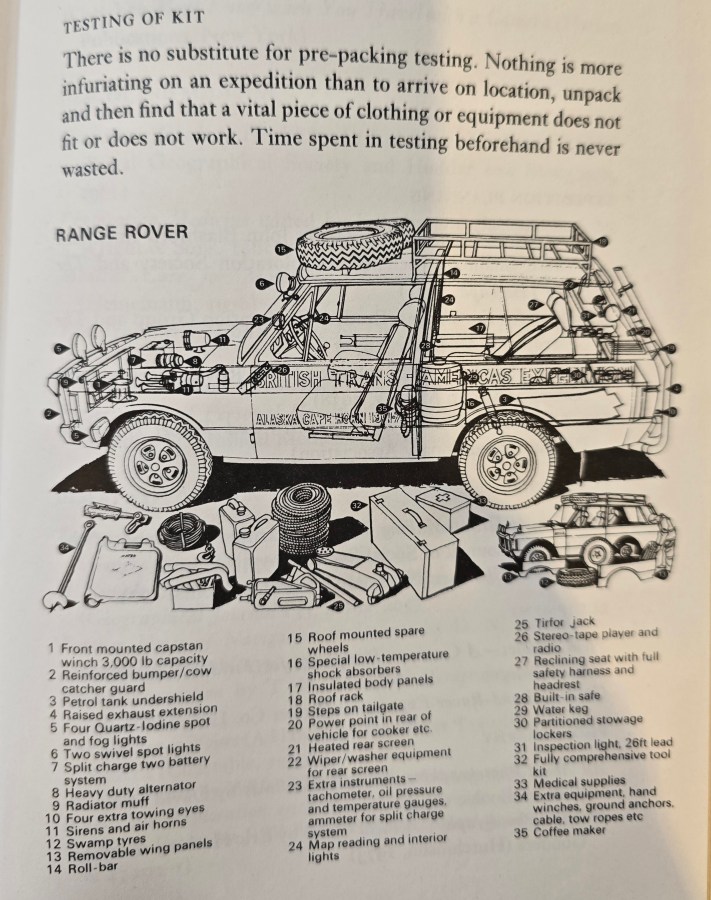
A basic overland toolkit covers sockets and spanners across the full range your vehicle uses, as well as screwdrivers, pliers, a multimeter, cable ties and wire. Add a torque wrench for anything structural, such as wheel nuts or suspension mounts. A decent trolley jack combined with a sand ladder doubling up as a base plate matter more than most travellers expect, since soft ground and sand are unstable under pressure.
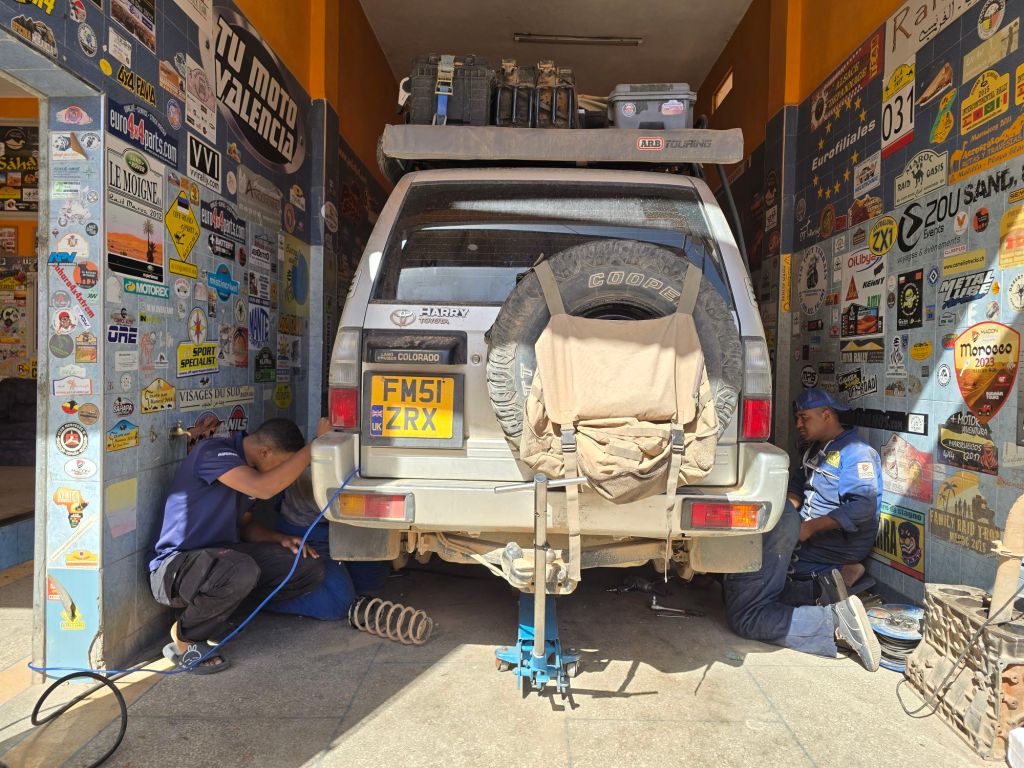
The more rally stickers, the better the mechanic
Recovery Equipment
A rated recovery point at each end of the vehicle is the first requirement, since bumpers and tow balls are not designed for recovery loads and fail under strain. Pair this with a kinetic recovery rope or snatch strap, rated well above the vehicle’s laden weight, and soft shackles to reduce the risk of injury from a failed recovery point.
A high lift jack earns its weight on sand and mud recoveries, allowing you to lift a bogged wheel and pack material beneath it, but only if you have suitable jacking points. An air compressor is really useful as deflating tyres for soft terrain and reinflating afterwards can happen multiple times in a day.
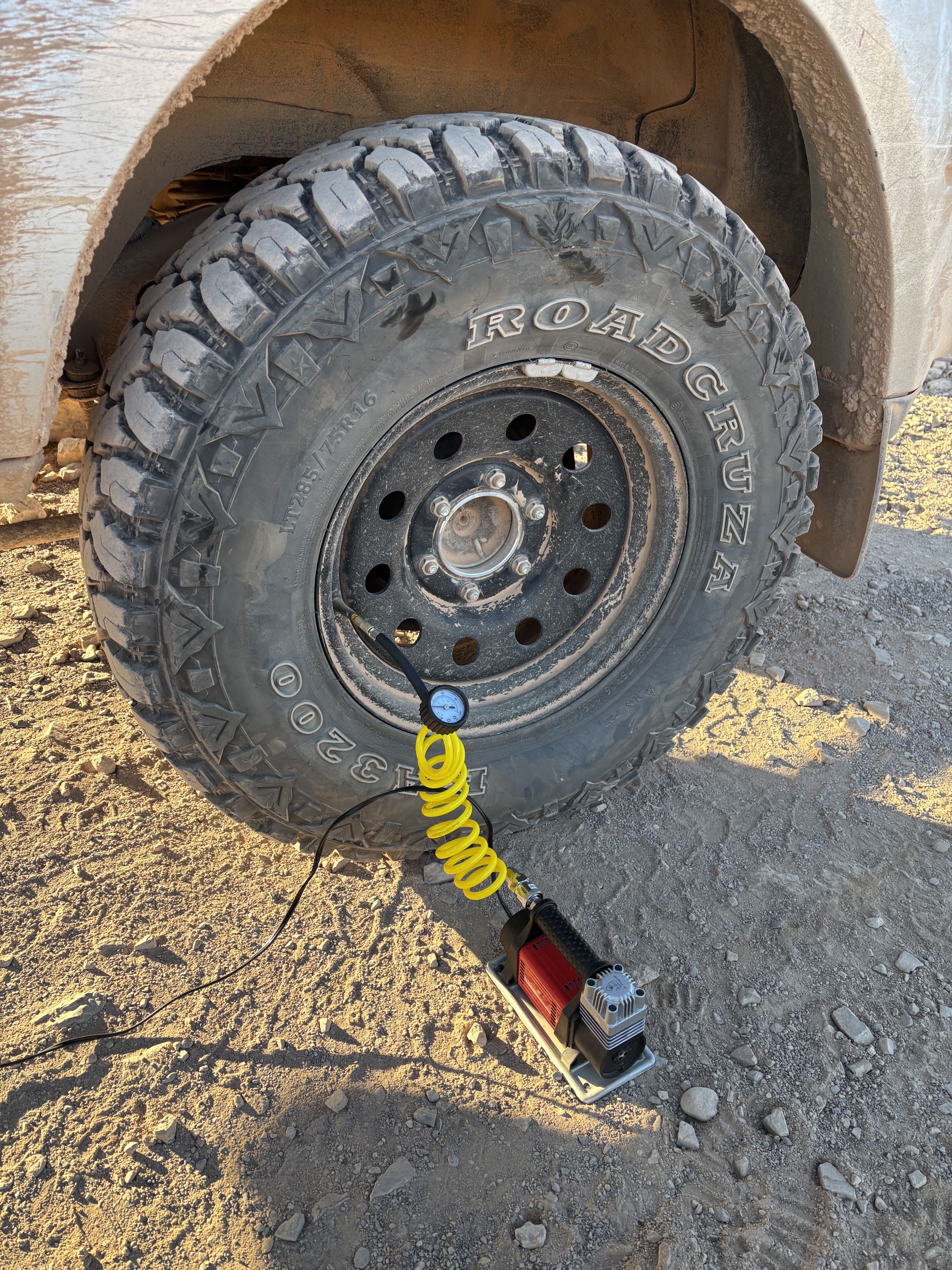
Compressors are essential overland equipment
Carry a basic understanding of these procedures before you need them. Reading a recovery strap’s rating under pressure, in poor light, with an audience, is the wrong moment to learn.
Winches
A winch solves a specific problem, self recovery without a second vehicle, and earns its cost and weight only on routes where solo recovery is a real possibility. For guided group trips travelling in convoy, a winch is rarely essential, since another vehicle and a kinetic strap usually resolve the situation faster.
Where a winch is justified, mounting and electrical draw deserve as much thought as the winch itself. A poorly wired winch strains the vehicle’s charging system, and an underrated mounting point defeats the purpose entirely. Synthetic winch line is lighter and safer under failure than steel cable, snapping without the recoil risk, and is now the sensible default for most overland builds.
Treat a winch as a considered addition once your recovery basics are proven, not a first purchase. Traction boards, a kinetic strap and a reliable jack solve the large majority of situations a solo overland traveller will actually encounter.
Prepare and practice for dealing with punctures
For anyone building a kit for the first time, spend proportionally more on recovery gear and tyre repair than on spare parts. Most trips end early due to a stuck vehicle or an unrepairable puncture, not a mechanical failure requiring a spare part.
A practical guide to selecting an overland 4×4: drivetrain, dimensions, payload, tyres, suspension and long term reliability in remote regions.
Choosing Your Overland Vehicle
Vehicle selection for overland travel is a series of compromises. Understanding what each choice costs you, in money, capability or comfort, is more valuable than chasing a single correct answer.
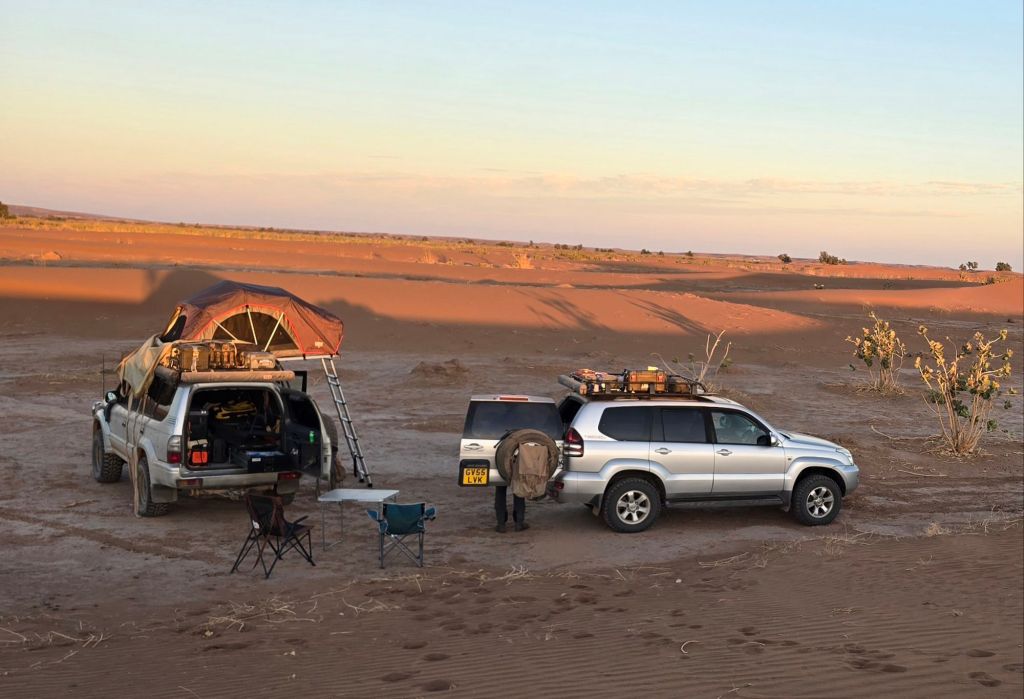
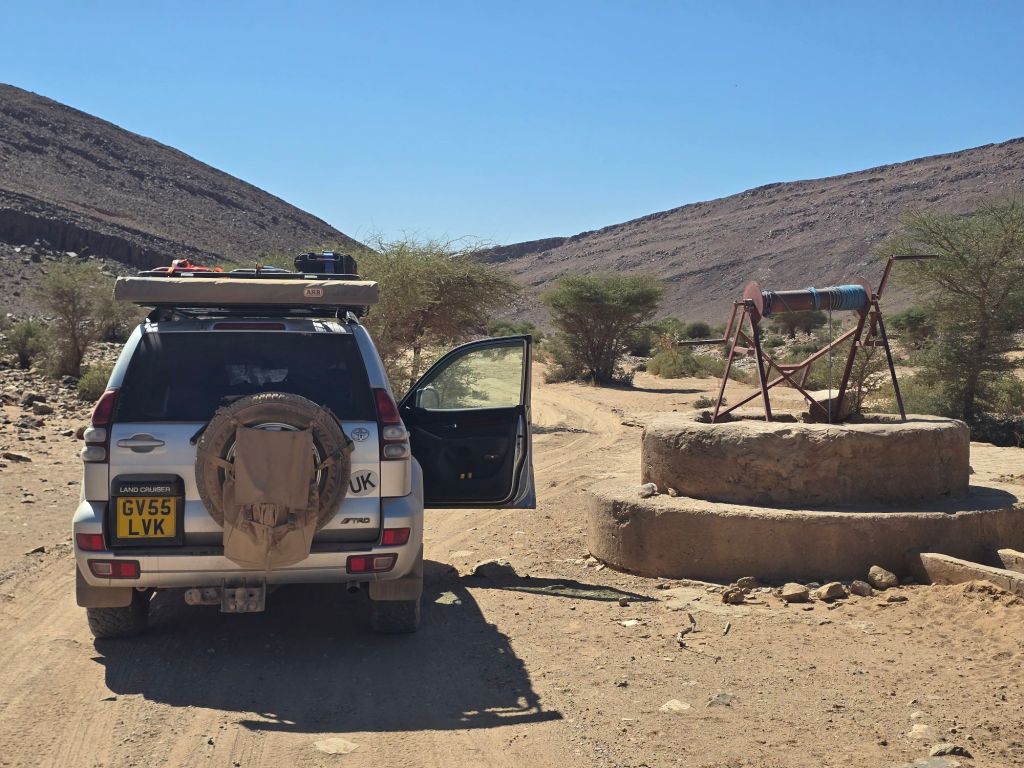
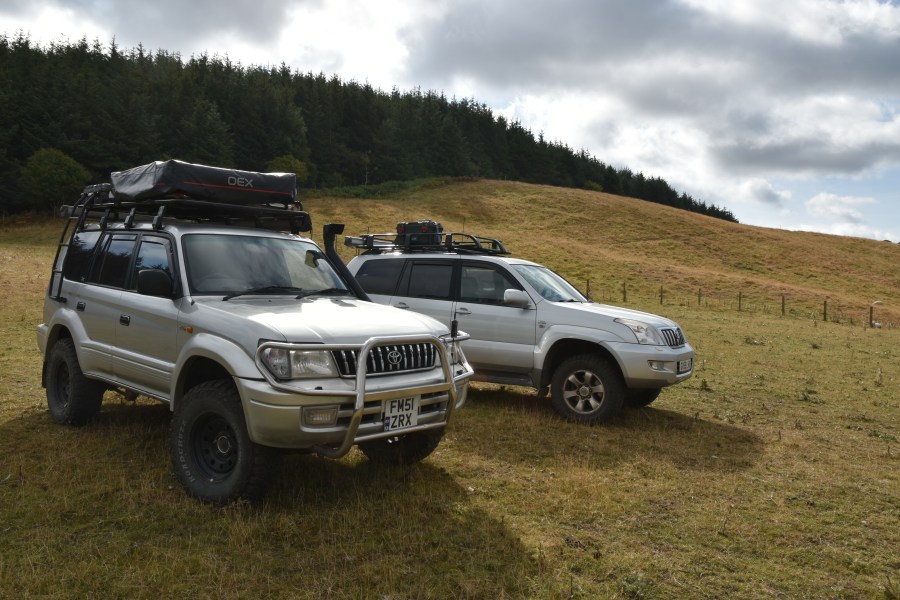
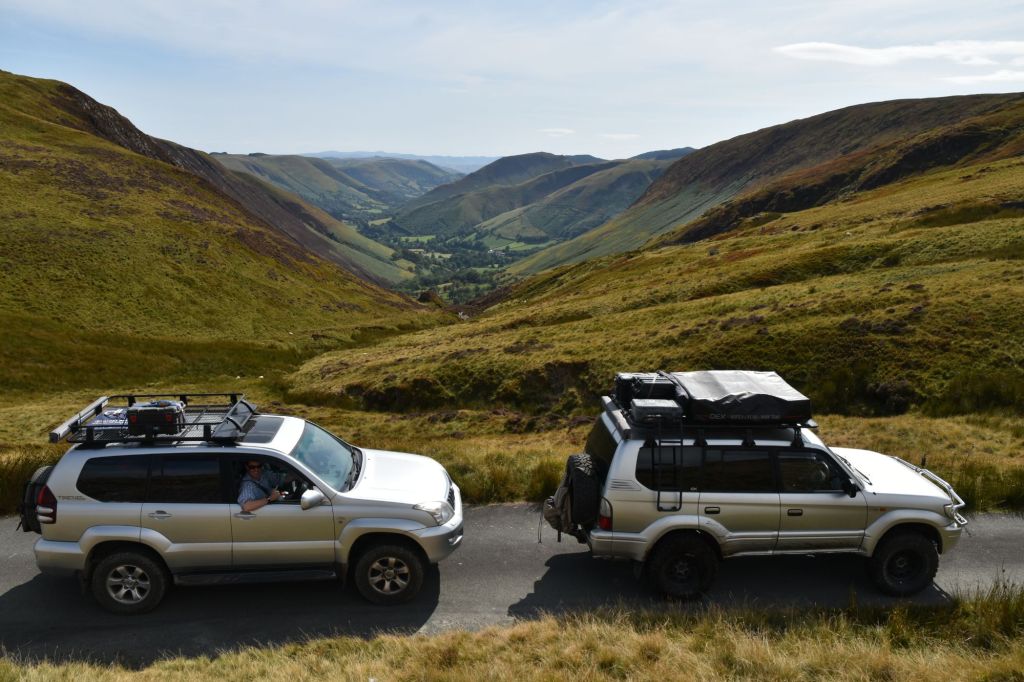
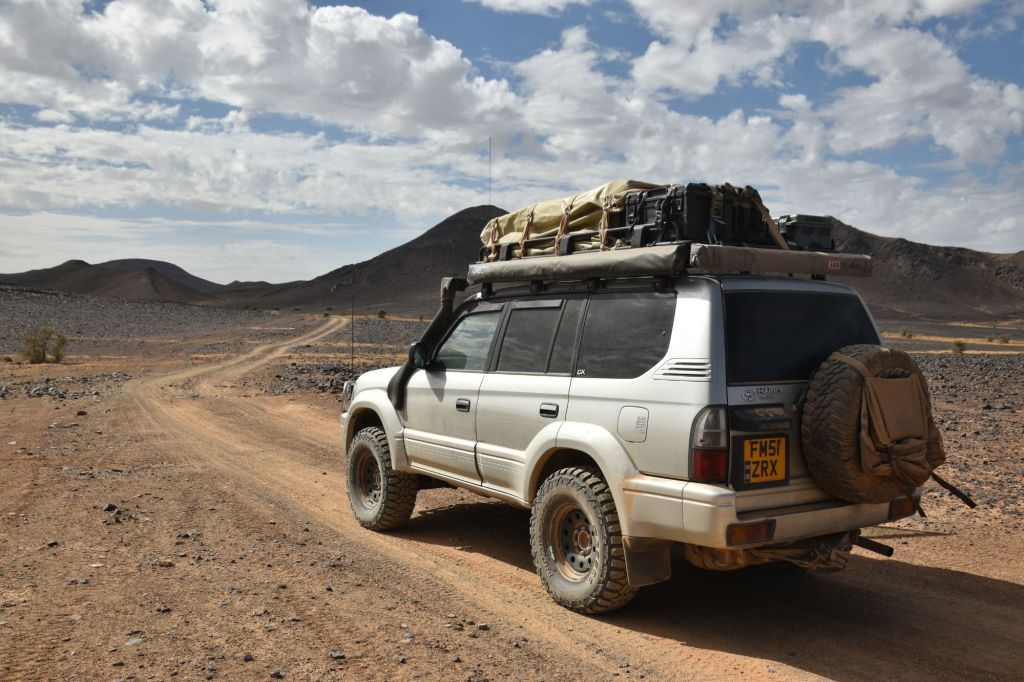
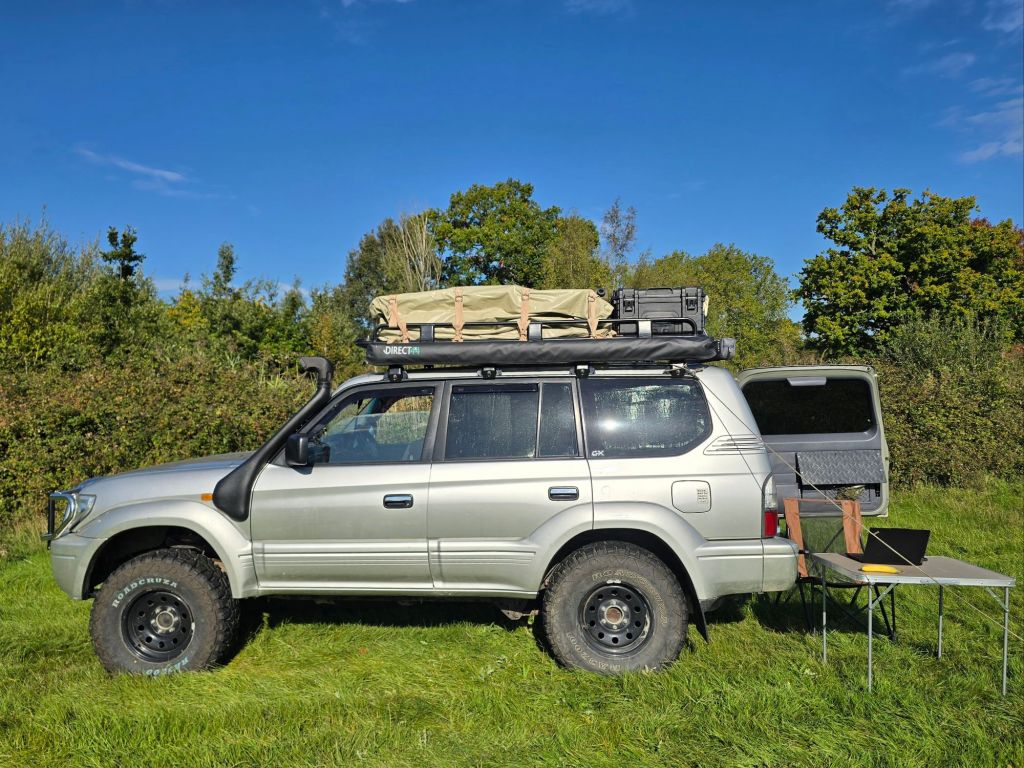
Toyota Landcruisers remain a popular choice
Drivetrain: 2WD, AWD and 4WD
A dedicated low range 4WD system remains the standard for serious overland work. Low range gearing allows controlled, low speed descents and sustained pulling power in sand, mud or steep rocky terrain, conditions where torque management matters more than outright power.
AWD systems, common in modern SUVs, distribute power automatically and perform well on loose or wet surfaces at speed. They are poorly suited to sustained low speed technical terrain and rarely offer meaningful ground clearance gains.
2WD vehicles can complete significant overland routes on graded tracks and in dry conditions, but margin for error narrows considerably once terrain deteriorates.
Size, Weight, Length and Height
Larger vehicles carry more but pay for it in approach and departure angles, narrow track width and difficulty on tight mountain switchbacks or in dense urban centres along the route. Weight affects recovery difficulty directly. A heavier vehicle stuck in soft sand or mud requires proportionally more recovery force, more anchor points and often more people.
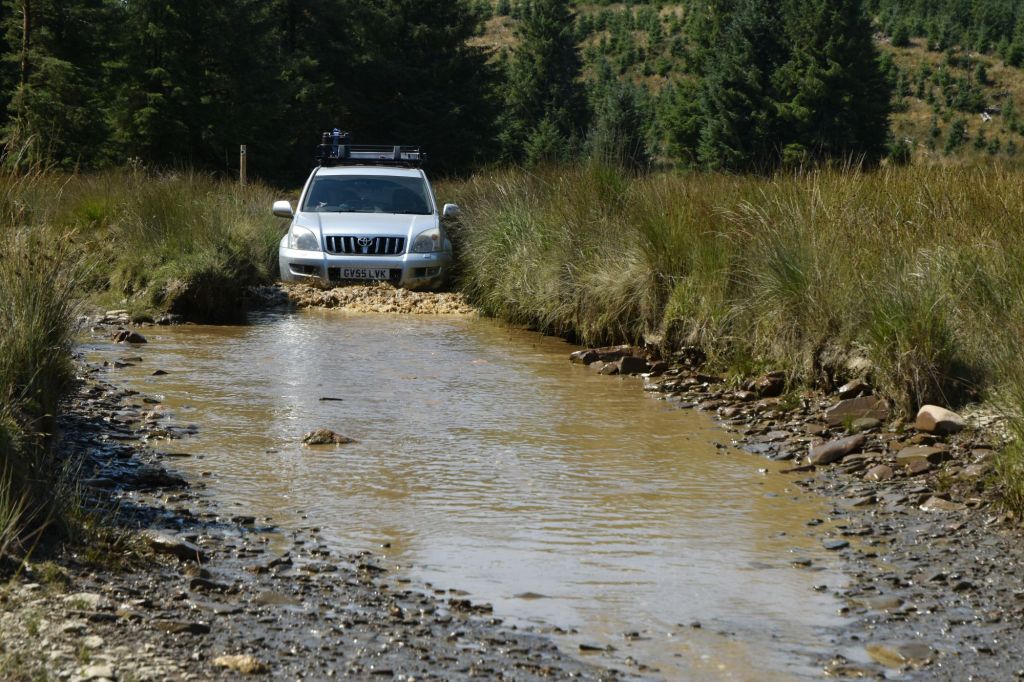
Water crossings challenge air intakes and driver skill
Height matters for wading depth and rollover margin on cambered tracks, but also for garages, ferries and low bridges, an unglamorous but recurring constraint.
Carrying Capacity
Internal payload should account for water, fuel, recovery gear, spares and food, not just people. Roof mounted loads raise the centre of gravity, so weight distribution deserves as much attention as total capacity. External capacity, roof racks, rear carriers and drawer systems, should be assessed against the vehicle’s rated payload, not just physical space available.
Reliability, Maintenance and Parts Availability
Mechanical simplicity has real value far from a dealership. Vehicles with widespread global distribution, particularly older Land Cruisers and Hiluxes, benefit from parts availability and local mechanic familiarity across Africa, Asia and South America. Electronic complexity, while often beneficial in normal use, can become a serious liability when diagnostic tools are unavailable.
Strength and Long Term Reliability
Taken together, these factors narrow the realistic field considerably. A vehicle capable of sustained overland work needs chassis strength to tolerate years of load and vibration, drivetrain components simple enough to diagnose roadside, and a service network that extends well beyond its home market. Few manufacturers meet all three consistently.
In practice this points toward a small group of mid size 4x4s with long production histories and proven ladder frame construction. Toyota’s Land Cruiser and Hilux ranges dominate this category globally, valued for durability and an unmatched spares network across remote regions. Nissan’s Patrol offers comparable strength and a loyal following, particularly in the Middle East and parts of Africa where local knowledge runs deep. Land Rover’s Defender, older models especially, retains a strong reputation for repairability and simple mechanicals, though parts sourcing outside Europe can be less consistent than for its Japanese rivals.
This is not a case of one manufacturer being definitively superior. Route, region and personal mechanical familiarity all shape the right answer. What the strength and reliability criteria do rule out, fairly consistently, are larger luxury oriented 4x4s and unibody SUVs, which tend to prioritise onboard comfort and technology over the structural simplicity overland use demands.
Tyres
Tyre choice shapes on road manners as much as off road capability. All terrain tyres suit the majority of overland routes, offering a workable balance of grip, tread life and reasonable road noise. Mud terrain tyres improve traction in deep mud and loose rock but wear faster and increase fuel consumption on tarmac.
Spare tyre provision matters as much as tread pattern. A single spare is adequate for well travelled routes with regular settlements. Remote or multi week routes justify carrying two, along with a plug kit, air compressor and the tools to break a bead by hand if required.
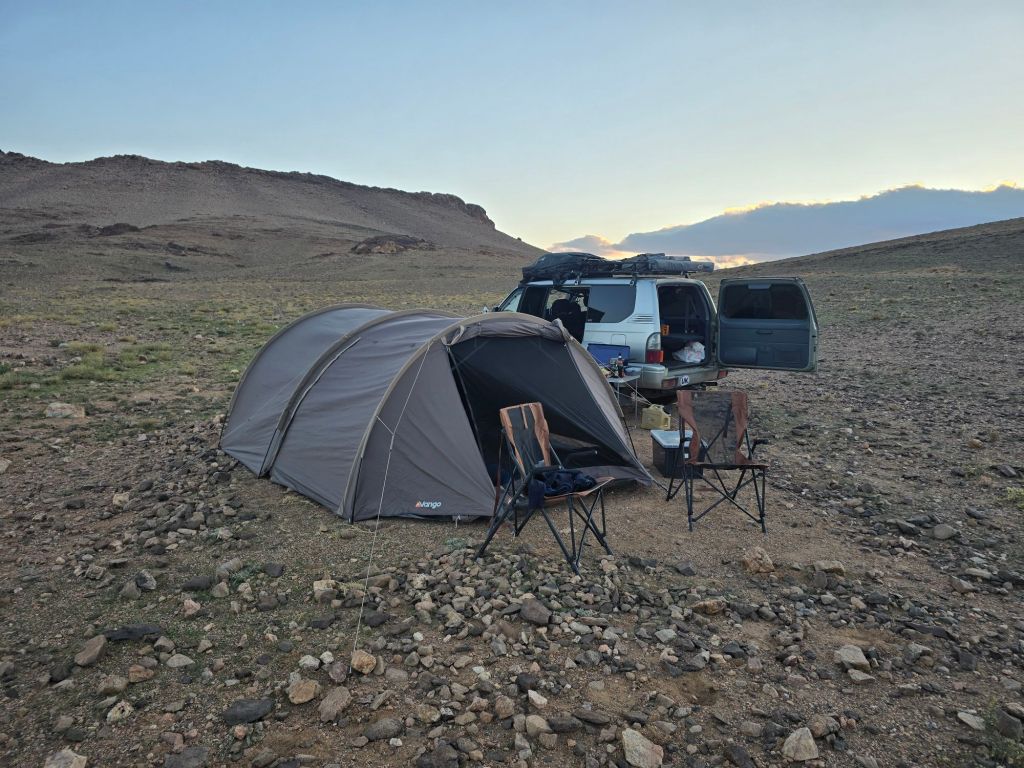
One spare tyre is the minimum safety margin
Suspension
Suspension governs both comfort and payload capacity over long distances. Standard road suspension sags quickly under overland loads, reducing clearance and altering handling. Heavy duty or aftermarket suspension, matched to the vehicle’s actual loaded weight rather than its unladen weight, preserves geometry and ride quality once drawers, water and fuel are aboard.
Independent front suspension generally rides more smoothly on rough surfaces at speed. Solid axle setups, while less refined, tend to be simpler to repair and more tolerant of extreme articulation, a relevant factor on rocky or badly eroded tracks.
Fuel Range and Autonomy
Fuel range determines route planning as much as any other single factor. Auxiliary tanks or jerry can capacity should be sized against the longest realistic distance between reliable fuel points on the intended route, with a working margin rather than a theoretical one. Diesel engines remain the practical default for overland work, offering wider availability, torque suited to load carrying, and mechanical designs that tolerate lower fuel quality better than most petrol equivalents.
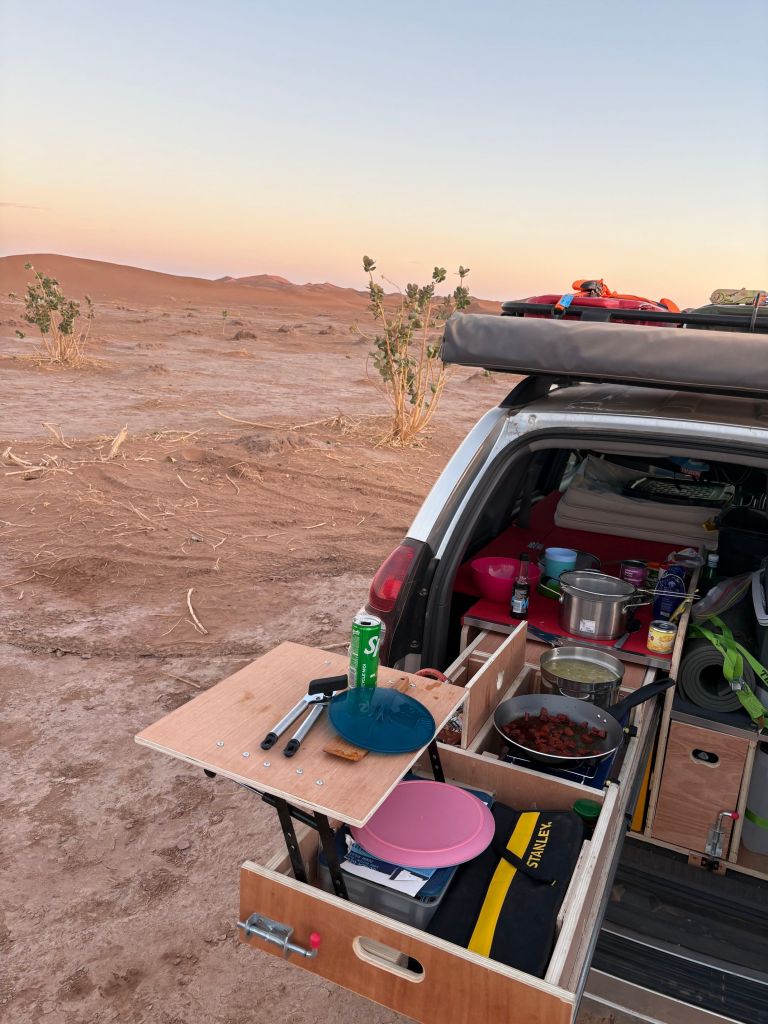
Food is an essential part of any expedition and overlanding is no different. Travelling in a 4×4 does have some advantages, you have a vehicle to carry the food and provide power!
There are several problems that need addressing for long range desert overland feeding:
Carrying enough food with limited space.
Fresh food perishing.
Eating a balanced nutritious diet.
Limited water.
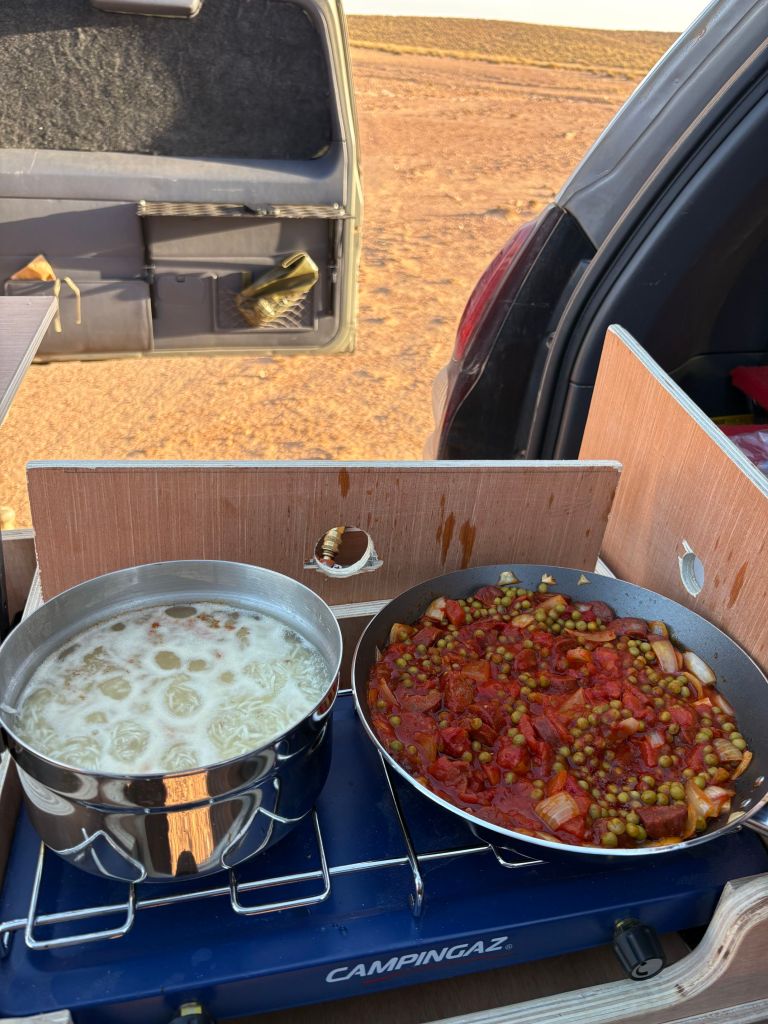
Rice and an ‘all-in’ at the end of the day
Refrigeration
A fridge is useful but not essential. While it does allow you to carry fresh food, it is reliant upon power, and some fridges can struggle in high temperatures. There are two options:
A fridge that is permanently on. Powered by the vehicle when the engine is running, and a storage battery when the vehicle turned off. This requires a storage battery (commonly a 1000w commercial leisure type) and can maintain a continuous temperature of 5C or similar
A standard camping fridge that only works when the vehicle is running. The fridge remains cool enough permanently for most groceries, but will warm to ambient temperature within 10 hours or so.
Food Storage
As at home food should be stored in a clean, cool, location in the vehicle, away from any contaminates (eg fuel, oil, or lubricants). Avoid keeping food on the roof as the chances of it perishing are higher.
A lunch cool box or similar is recommended for driving snacks in the cab to keep the food clean and easy to find.
Hygiene
Hand and food hygiene is essential to avoid illness. All utensils should be washed appropriately, hands washed before food preparation and the use of anti-bacterial sprays and hand gels encouraged.
Cooking
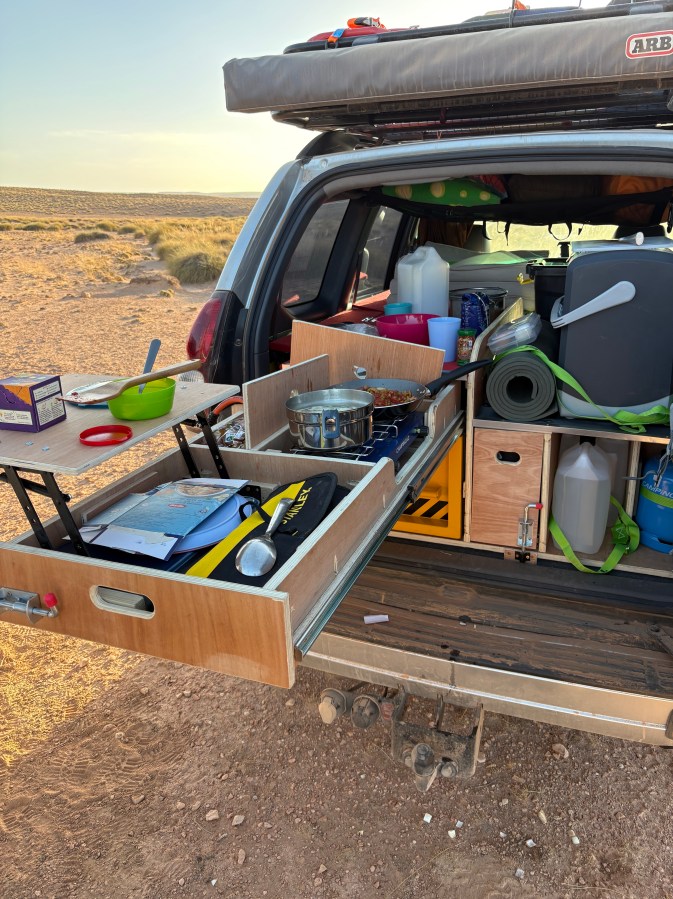
A gas, two-hob, cooker or similar can be used for cooking the main meal, and a small camping cooker (eg. a Jet Boil) may be easier for making a quick brew. Gas can often be purchased in country, but it is work checking what attachments come with it. Calorgaz is common across many continents.
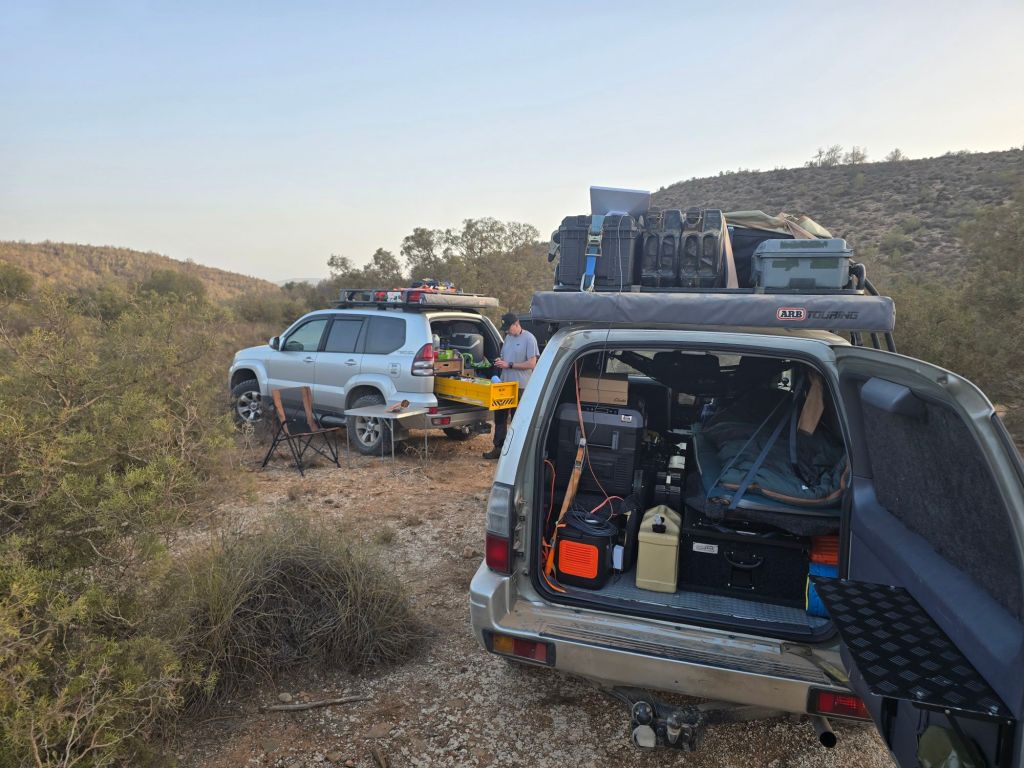
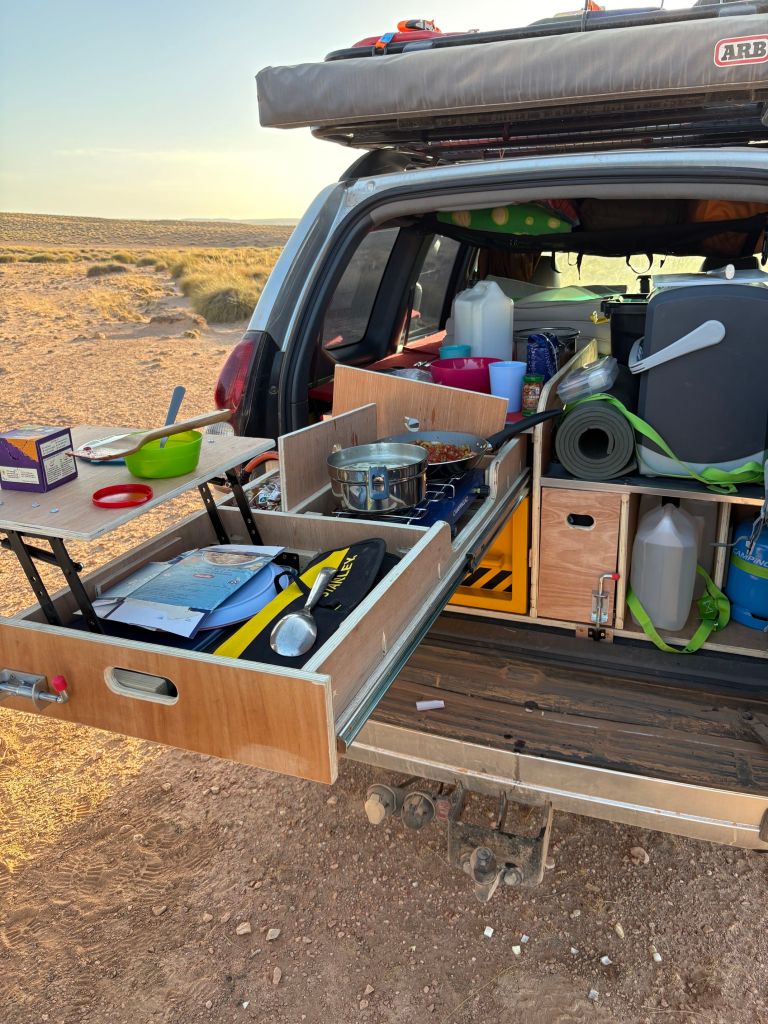
Water storage in 5l containers, integral gas cooker with built in storage
Water Carriage
The amount of water that vehicle can carry is finite due to volume and weight, and so care should be taken with water use in the desert. Drinking and cooking can be prioritised over personal hygiene if needed. Storing ready access water is easier in smaller jerrycans (5 or 10 litre) as they are easier to lift, store and fill water bottles and saucepans. Water can be stored in the vehicle (helps keep weight low down) or on the roof. It is recommended to keep an untouched emergency water reserve in case should you become stranded for a long period.
Water Resupply
Bottled drinking water can often be purchased at petrol stations or village stores. If water is taken from local sources (wells, rivers etc) it should always be purified before use, even if being used as ‘grey water’, to avoid the risk of disease.
Shopping list
Below is a list of food for desert travel. It is non-exhaustive and is only limited by your imagination.
Meat
Vegetables (canned)
Carbohydrates
Fruit
Snacks
Canned Pate
Sweetcorn
Rice
Dried fruit packets
Biscuits
Canned chicken in sauce
Mixed vegetables
Pasta
Raisins
Nutty bars
Canned mince
Peas
Noodles
Puréed fruit sachets
Peanuts
Biltong
Mushrooms
Rice Noodles
Rasins
Canned steak
Tomato
Baked beans
Mixed nuts
Canned frankfurters
Tinned Soup
Cannellini beans
Chorizo
Butter beans
Salami
Bean salad
Porridge
Muesli
Crackers
Rice cakes
Canned rice pudding
Sauces
Dairy
Bread
Fish
Spreads
Pesto green and red
Hard cheese (eg parmesan)
Sliced (gluten free sometimes has a longer shelf life)
Anchovies
Peanut Butter
Pasta sauce packets
Primula cheese spread
Wraps
Sardines
Jam
Pataks Curry paste
UHT milk
Tortillas
Tuna
Marmite
Fajita powder
Pitta Bread
Honey
Chili con carne powder
Rolls
Chinese sauces (e.g. sweet and sour)
Condiments
Brew Kit
Herbs
Fresh Food
Emergency Rations
Ketchup
Coffee
Ras al Hanout
Onions
Vacuum packed rations
Soy Sauce
Tea bags
Herbs de Provence
Salami – keep at or below 18C
Army rations
Pickles
Powdered milk
Rosemary
Garlic
Avoid ‘Arctic’ rations as they need extra water to rehydrate
Salt
3-in-1 coffee sachets
Oregano
Eggs
Pepper
Hot Chocolate
Basil
Butter
Tomato Puree
Sugar Sachets
Cumin seeds
Olive Oil
Sweeteners
Berocca
Multi-vitamins
Designated areas for cooking help with hygiene
Dish ideas
Below are some ideas for simple dishes;
Breakfast
Lunch
Dinner
Muesli and UHT milk
Crackers with primula cheese spread, pate, sardines (mashed into a paste with ras al hanout)
Curry with chorizo/salami, veg and rice
Porridge
Fruit sachet
Omelettes (cheese, chorizo, …)
Oats and UHT milk (with raisins/honey/nuts)
Wrap/pitta and jam/peanut butter/marmite
Pasta pesto/sauce with chorizo and veg
Wrap/Pitta with peanut butter/jam/marmite
Nutty bar
Pasta bolognaises
Raisins
Noodles (sweet and sour etc) with chorizo/salami/biltong and veg
Using the last of the British autumnal warmth to work outdoors in late September.
Overland Support
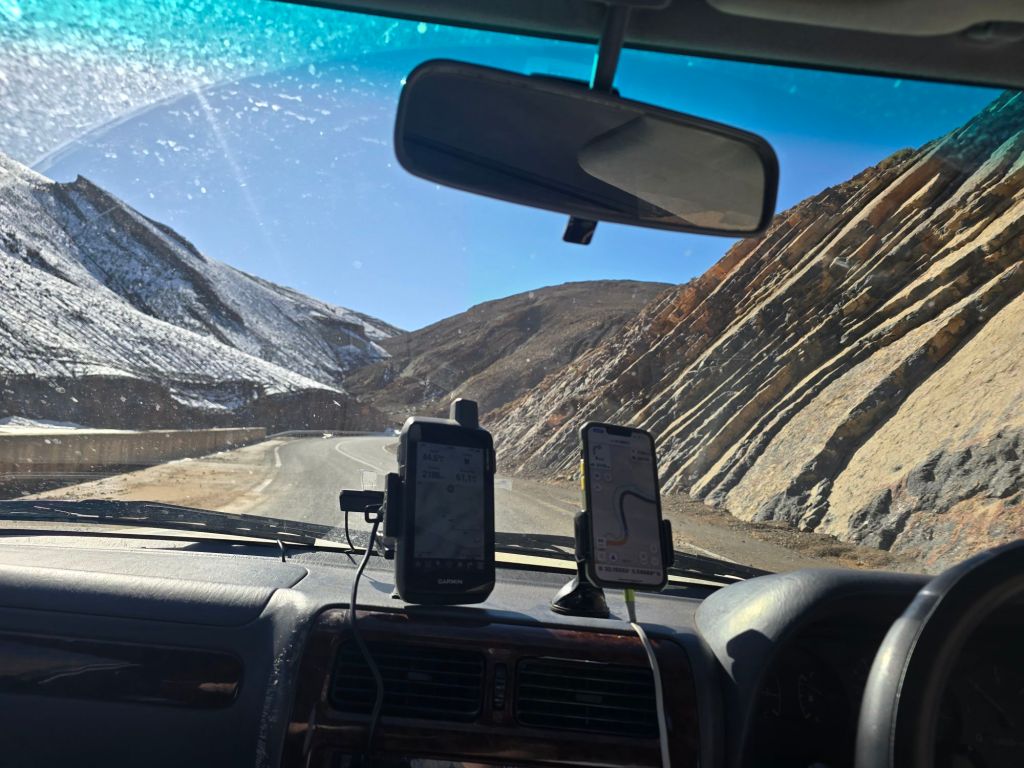
Running an effective overland vehicle really needs a broad range of multidisciplinary skills. To keep the rig roadworthy requires mechanical repairs and cyclical engine servicing. To maintain on board lifesupport systems of clean water, sleeping kit and galley cooking needs a different set of tasks to be completed. Technically, running navigation and communications equipment is a wide third category full of knowledge and activities. In short, keeping a truck ready for a prolonged expedition takes significant inputs of time and energy. Equipment and technology is constantly evolving, constantly needing new integration and learning cycles to set up and use alongside existing kit.
Continuous Running
Most of us therefore go through pulses of set up prior to a trip and then either deep maintenance or storage after a trip. This season has been trying to maintain a continuous use pattern, forcing maintenance and administration to stay in date rather than go through a sine wave of hasty development peaks and neglected lows. This has allowed really useful refinement and development of expedition support techniques, kept the vehicle in a better condition, and sets the conditions for safer operating.