Desert Expedition Feeding
Food is an essential part of any expedition and overlanding is no different. Travelling in a 4×4 does have some advantages, you have a vehicle to carry the food and provide power!
There are several problems that need addressing for long range desert overland feeding:
- Carrying enough food with limited space.
- Fresh food perishing.
- Eating a balanced nutritious diet.
- Limited water.
Refrigeration
A fridge is useful but not essential. While it does allow you to carry fresh food, it is reliant upon power, and some fridges can struggle in high temperatures. There are two options:
- A fridge that is permanently on. Powered by the vehicle when the engine is running, and a storage battery when the vehicle turned off. This requires a storage battery (commonly a 1000w commercial leisure type) and can maintain a continuous temperature of 5C or similar
- A standard camping fridge that only works when the vehicle is running. The fridge remains cool enough permanently for most groceries, but will warm to ambient temperature within 10 hours or so.
Food Storage
As at home food should be stored in a clean, cool, location in the vehicle, away from any contaminates (eg fuel, oil, or lubricants). Avoid keeping food on the roof as the chances of it perishing are higher.
A lunch cool box or similar is recommended for driving snacks in the cab to keep the food clean and easy to find.
Hygiene
Hand and food hygiene is essential to avoid illness. All utensils should be washed appropriately, hands washed before food preparation and the use of anti-bacterial sprays and hand gels encouraged.
Cooking
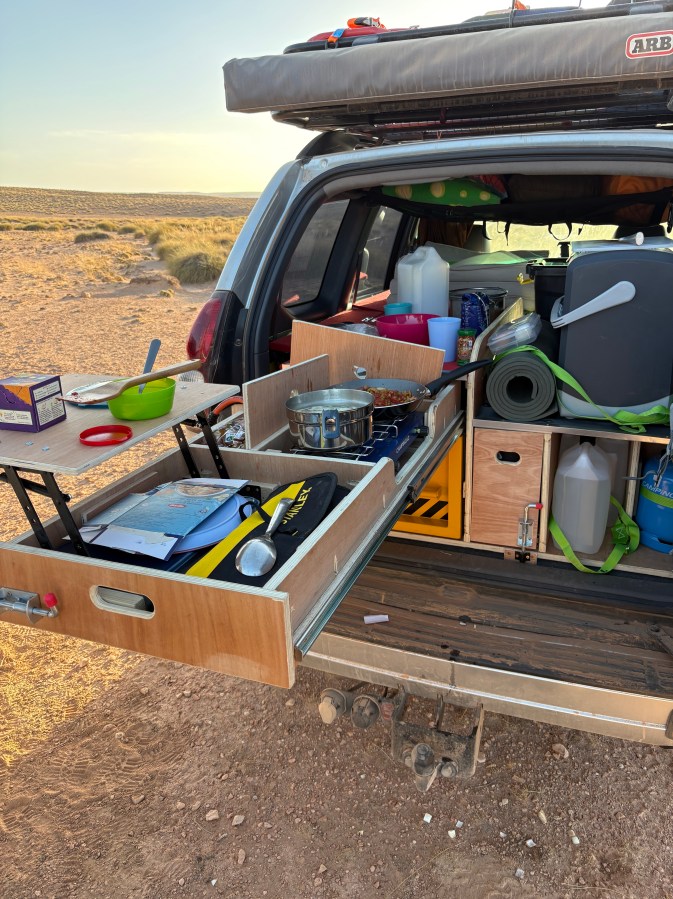
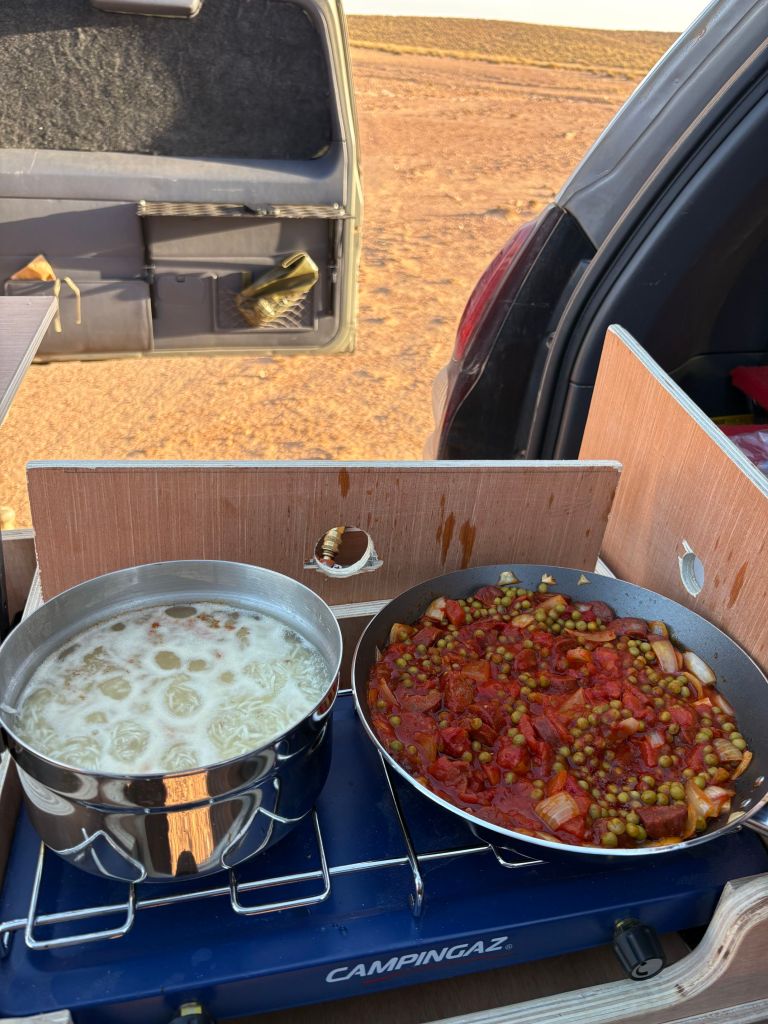
A gas, two-hob, cooker or similar can be used for cooking the main meal, and a small camping cooker (eg. a Jet Boil) may be easier for making a quick brew. Gas can often be purchased in country, but it is work checking what attachments come with it. Calorgaz is common across many continents.
Water Carriage
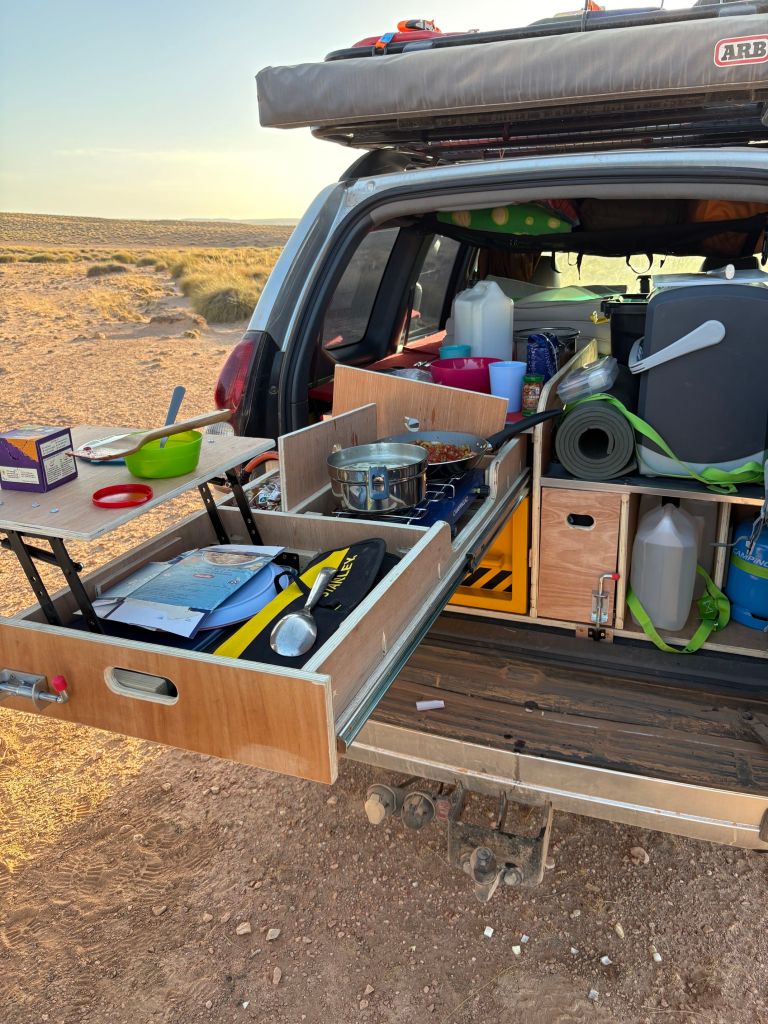
The amount of water that vehicle can carry is finite due to volume and weight, and so care should be taken with water use in the desert. Drinking and cooking can be prioritised over personal hygiene if needed. Storing ready access water is easier in smaller jerrycans (5 or 10 litre) as they are easier to lift, store and fill water bottles and saucepans. Water can be stored in the vehicle (helps keep weight low down) or on the roof. It is recommended to keep an untouched emergency water reserve in case should you become stranded for a long period.
Water Resupply
Bottled drinking water can often be purchased at petrol stations or village stores. If water is taken from local sources (wells, rivers etc) it should always be purified before use, even if being used as ‘grey water’, to avoid the risk of disease.
Shopping list
Below is a list of food for desert travel. It is non-exhaustive and is only limited by your imagination.
| Meat | Vegetables (canned) | Carbohydrates | Fruit | Snacks |
| Canned Pate | Sweetcorn | Rice | Dried fruit packets | Biscuits |
| Canned chicken in sauce | Mixed vegetables | Pasta | Raisins | Nutty bars |
| Canned mince | Peas | Noodles | Puréed fruit sachets | Peanuts |
| Biltong | Mushrooms | Rice Noodles | Rasins | |
| Canned steak | Tomato | Baked beans | Mixed nuts | |
| Canned frankfurters | Tinned Soup | Cannellini beans | ||
| Chorizo | Butter beans | |||
| Salami | Bean salad | |||
| Porridge | ||||
| Muesli | ||||
| Crackers | ||||
| Rice cakes | ||||
| Canned rice pudding |
| Sauces | Dairy | Bread | Fish | Spreads |
| Pesto green and red | Hard cheese (eg parmesan) | Sliced (gluten free sometimes has a longer shelf life) | Anchovies | Peanut Butter |
| Pasta sauce packets | Primula cheese spread | Wraps | Sardines | Jam |
| Pataks Curry paste | UHT milk | Tortillas | Tuna | Marmite |
| Fajita powder | Pitta Bread | Honey | ||
| Chili con carne powder | Rolls | |||
| Chinese sauces (e.g. sweet and sour) |
| Condiments | Brew Kit | Herbs | Fresh Food | Emergency Rations |
| Ketchup | Coffee | Ras al Hanout | Onions | Vacuum packed rations |
| Soy Sauce | Tea bags | Herbs de Provence | Salami – keep at or below 18C | Army rations |
| Pickles | Powdered milk | Rosemary | Garlic | Avoid ‘Arctic’ rations as they need extra water to rehydrate |
| Salt | 3-in-1 coffee sachets | Oregano | Eggs | |
| Pepper | Hot Chocolate | Basil | Butter | |
| Tomato Puree | Sugar Sachets | Cumin seeds | ||
| Olive Oil | Sweeteners | |||
| Berocca | ||||
| Multi-vitamins |
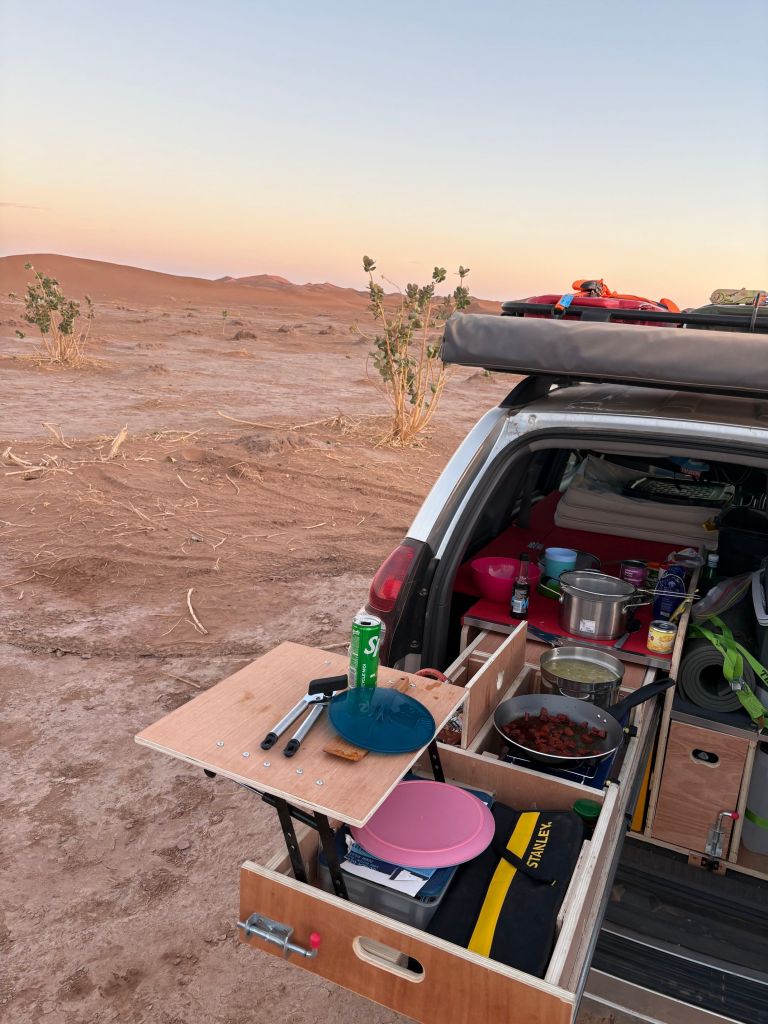
Dish ideas
Below are some ideas for simple dishes;
| Breakfast | Lunch | Dinner |
| Muesli and UHT milk | Crackers with primula cheese spread, pate, sardines (mashed into a paste with ras al hanout) | Curry with chorizo/salami, veg and rice |
| Porridge | Fruit sachet | Omelettes (cheese, chorizo, …) |
| Oats and UHT milk (with raisins/honey/nuts) | Wrap/pitta and jam/peanut butter/marmite | Pasta pesto/sauce with chorizo and veg |
| Wrap/Pitta with peanut butter/jam/marmite | Nutty bar | Pasta bolognaises |
| Raisins | Noodles (sweet and sour etc) with chorizo/salami/biltong and veg | |
| Chilli con carne and rice | ||
| Biltong fajitas | ||
| Canned chicken with pasta and vegetables |